


How to Move Furniture Through Tight Spaces, Stairs, and Corners Without Damage
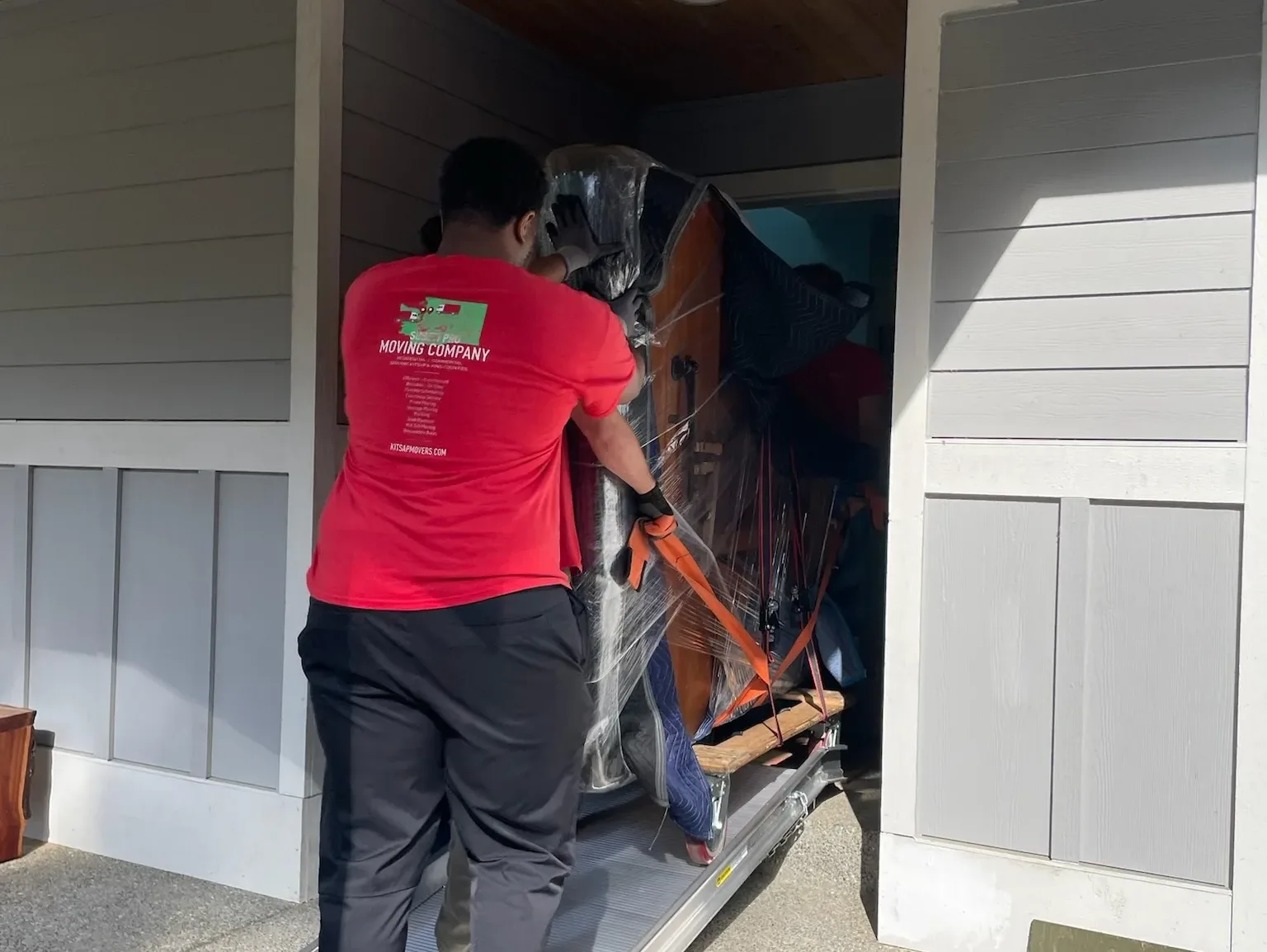
Most furniture damage doesn’t happen in the moving truck; it happens inside the house. The scuffs on the drywall, the crack in the banister, and the gouge in the couch leg almost always occur while navigating a tight corner, a narrow doorway, or a tricky flight of stairs. Many people make the mistake of trying to use brute force, pushing and shoving until something gives. But professional movers know a secret: moving large furniture safely is less about strength and more about geometry and control. This guide will walk you through expert techniques for moving furniture like a pro.
The Science of Space: Why Furniture Gets Stuck
Have you ever tried to push a sofa straight through a doorway only to have it jam instantly? This is the most common mistake. Furniture rarely fits through an opening when it is perfectly flat or straight. It fits on the diagonal. The fundamental concept to grasp is this: you are not carrying an item through an opening; you are rotating it through the opening. Once you understand that every tight space is a puzzle of angles, you’ve unlocked the key to moving without damage.
Insight from Our Team:
“Navigating furniture through narrow stairwells and hallways requires genuine expertise that’s often underestimated. What appears effortless is actually the result of experience and skill, the most accomplished movers transform even the trickiest maneuvers into what looks like a seamless, choreographed performance”.
Chris Ortiz – Moving Logistics Coordinator
Step 1: Measure Before You Lift a Finger
Before you even think about lifting that heavy sectional, grab a tape measure. A few minutes of measuring can save you hours of frustration and costly repairs.
Measure the Space
First, map out the path your furniture will take and measure every potential obstacle.
- Doorways: Record both the width and the height.
- Hallways: Measure the width at its narrowest point.
- Stairs: Check the ceiling clearance at the lowest point and the width of the staircase.
Landings: Measure the depth and width of any landings where you’ll need to turn.
Measure the Furniture
Next, measure the item you plan to move from every angle.
- Height: The measurement from top to bottom when standing upright.
- Width: The measurement from arm to arm (or its widest point).
- Depth: The measurement from front to back.
- Diagonal Height: For couches and bulky items, measure from the top back corner to the bottom front corner.
Pro Tip: If the diagonal height of your furniture is greater than the height of your doorway, it will not fit through horizontally. You must plan to bring it in vertically.
Step 2: Strategize the Entire Path
With your measurements in hand, walk the entire route from start to finish. Visualize the item moving through the space and identify the single most difficult point in the journey. This is usually one specific corner, a low-hanging light fixture, or a tight turn on a stair landing.
Look specifically for:
- The tightest turn in a hallway.
- Low ceilings on stairs
- Railings or banisters that protrude into the path.
- Light fixtures, smoke detectors, or thermostats on the walls.
- The direction that doors swing and whether they can be removed.
Figure out exactly how you will navigate that one critical point before you lift anything. Solving the hardest part of the puzzle first makes the rest of the move straightforward.
Step 3: Protect Your Home and Furniture
Damage often happens from one sudden, unexpected bump, not from constant scraping. Taking the time to pad and protect your space is a non-negotiable step for any professional.
Protect the Home
- Drape heavy-duty moving blankets over railings and banisters.
- Use corner guards or tape cardboard over sharp corners on walls.
- Lay down floor protection like Ram Board or flattened cardboard boxes.
- Remove any area rugs that could slip or bunch up underfoot.
Protect the Furniture
- Wrap each piece completely with moving blankets, securing them with packing tape or stretch wrap.
- Never apply tape directly to finished wood or upholstered surfaces, as it can damage the finish or fabric.
- Secure or remove cushions so they don’t shift or fall during the move.
Step 4: Master Professional Movement Techniques
This is where geometry replaces muscle. Each type of obstacle requires a specific technique.
The Pivot: For Doorways and Hallways
Instead of pushing a couch straight into a doorway, stand it on its end (if ceiling height allows) or tilt it.
- Lift one end of the item upward.
- Angle the other end forward, guiding the bottom through the doorway first.
- Slowly rotate the piece through the opening, like turning a key in a lock. Avoid: Pushing the item flat against the door frame. This is the number one cause of damage to both walls and furniture.
The Hook Turn: For Stair Landings
When you reach a tight landing on a staircase:
- Raise the front end of the item high toward the ceiling.
- Keep the back end low, close to the stairs you just came up.
- Swing the bottom of the item inward, “hooking” it around the corner. Do not stop mid-turn. A slow, continuous, and controlled movement is essential to prevent the item from getting stuck.
The High-Low Carry: For Navigating Stairs
When carrying furniture up or down stairs, gravity is not your friend.
- The person at the bottom should carry the majority of the weight with their hands low.
- The person at the top should have their hands high, focusing on controlling the direction and balance. Never try to carry an item level on stairs; the weight will become unstable and pull it out of your control.
The Stand and Rotate: For Mattresses and Box Springs
King-size mattresses and box springs are notoriously difficult in narrow stairwells, like those found in older Bremerton or Gig Harbor homes.
- Carry the mattress or box spring vertically, on its edge.
- When you reach a landing, stand it upright.
- Rotate it on the landing to face the new direction.
- Re-position for the next flight of stairs. Trying to carry a mattress flat or bending it forcefully is what causes damage to the mattress, walls, and railings.
Know When to Disassemble
If an item barely fits when assembled, it probably won’t fit safely. Before moving, remove any parts you can to make the piece smaller and lighter.
- Bed frames
- Table legs
- Connectors for sectional sofas
- Shelving units
- Drawers from dressers and armoires (this also reduces weight and stops them from sliding out)
Conclusion: It’s About Technique, Not Power
Moving large furniture successfully isn’t about how much you can lift. It’s about angles, patience, and control. A slow and planned move will always beat a fast and forced one. By measuring, planning your path, protecting your space, and using the right techniques, you can prevent damage and move your largest items with confidence. Remember the golden rule: if it stops moving smoothly, stop and reassess. Forcing it is what causes damage.
Tight Spaces Furniture Moving FAQs
How do you get a couch through a doorway that’s too small?
Most sofas will not fit straight through a doorway; they must be rotated diagonally. Professional movers stand the couch on its end or tilt it, guide one corner through first, and slowly pivot the rest through the opening. Measuring the doorway height and the sofa’s diagonal depth beforehand determines the correct angle and prevents frame or wall damage.
Can you move furniture upstairs without damaging walls or railings?
Yes, but it requires controlled techniques rather than lifting strength. Movers use a high-low carry where the lower person supports the weight and the upper person guides the direction. Railings and corners are padded with blankets, and the furniture is angled around stair landings using a continuous “hook turn” motion instead of stopping and forcing it.
Why does furniture get stuck in corners and hallways during a move?
Furniture rarely passes through tight spaces flat; it moves through at a rotating angle. When people push straight forward, the item wedges against two fixed points at once. Professionals solve this by planning pivot points ahead of time and rotating the piece around the tightest turn rather than pushing against it.
Should I disassemble furniture before trying to move it through tight spaces?
If a piece barely fits, it usually won’t fit safely. Removing legs, bed frames, drawers, or sectional connectors reduces size and weight while preventing cracks or joint damage. Disassembly is often the difference between a clean move and permanent structural damage to the furniture.
When should you call professional movers for large furniture?
You should call professionals when a piece requires complex turns, stair navigation, vertical lifting, or when measurements leave less than 1–2 inches of clearance. Tight landings, spiral staircases, heavy sectionals, and oversized mattresses are common situations where professional techniques prevent costly damage to both the home and the furniture.
Need a Hand with a Tricky Move?
If you’ve measured, planned, and still find that an item just won’t pass safely, it’s always better to stop before damage happens. Our expert teams are masters of geometry and have navigated the most challenging spaces in Kitsap and King Counties. If you need help evaluating a difficult layout or want professionals to handle the heavy lifting, contact us for a free, no-obligation consultation.


Get a Quick Quote
Ready to schedule your move? Fill out this form to get a quick moving quote:
Moving Resources
Why Local Moves Fail (and How to Avoid the Same Mistakes)
Local Moving Checklist: 10 Things to Do Before Moving Day
How to Move Furniture Through Tight Spaces, Stairs, and Corners Without Damage
How to Spot Red Flags in a Full-Service Moving Quote
The Pro’s Playbook: A Damage-Free Guide to Moving Your Heavy Furniture
The Professional Approach to Piano Moving
The Most Overlooked Services Full-Service Movers Can Handle
Real Costs of a Full-Service Move: Where Your Money Actually Goes
How to Prepare for a Full-Service Move: The Ultimate Guide to a Flawless Relocation
Pro Moving Services
Serving Western Washington Local Moves
- Kitsap County
- Allyn
- Bainbridge Island
- Belfair
- Bremerton
- Brownsville
- Edmonds
- Gig Harbor
- Gorst
- Grapeview
- Hansville
- Holly
- Indianola
- Keyport
- Kingston
- Port Angeles
- Port Gamble
- Port Ludlow
- Port Orchard
- Port Townsend
- Poulsbo
- Seabeck
- Shelton
- Silverdale
- Southworth
- Sequim
- Suquamish
- Tacoma
- Tracyton
- Union
- Seattle