


Local Moving Checklist: 10 Things to Do Before Moving Day

The secret to a smooth moving day is that the real work happens long before the truck arrives. From professional movers’ experience, the homes that finish fastest and the moves that cost the least aren’t the ones with fewer belongings. They’re the perfectly prepared ones. A little prep work can dramatically decrease the time, stress, and final cost of your local move. This is an insider’s guide: a checklist of simple tasks that make your moving day faster, smoother, and more affordable.
1. Finish All Packing the Night Before
The most significant delay on moving day is unfinished packing. When your moving crew arrives, their job is to begin loading the truck efficiently. If they have to wait for boxes to be packed or loose items to be sorted, the entire process grinds to a halt.
How to Prepare:
- Ensure all boxes are fully packed, taped shut, and clearly labeled.
- Empty all drawers of loose items unless you’ve confirmed with your movers that they are safe to move as-is.
- Clear all small, loose items from countertops, tables, and desks.
2. Clear All Pathways Inside Your Home
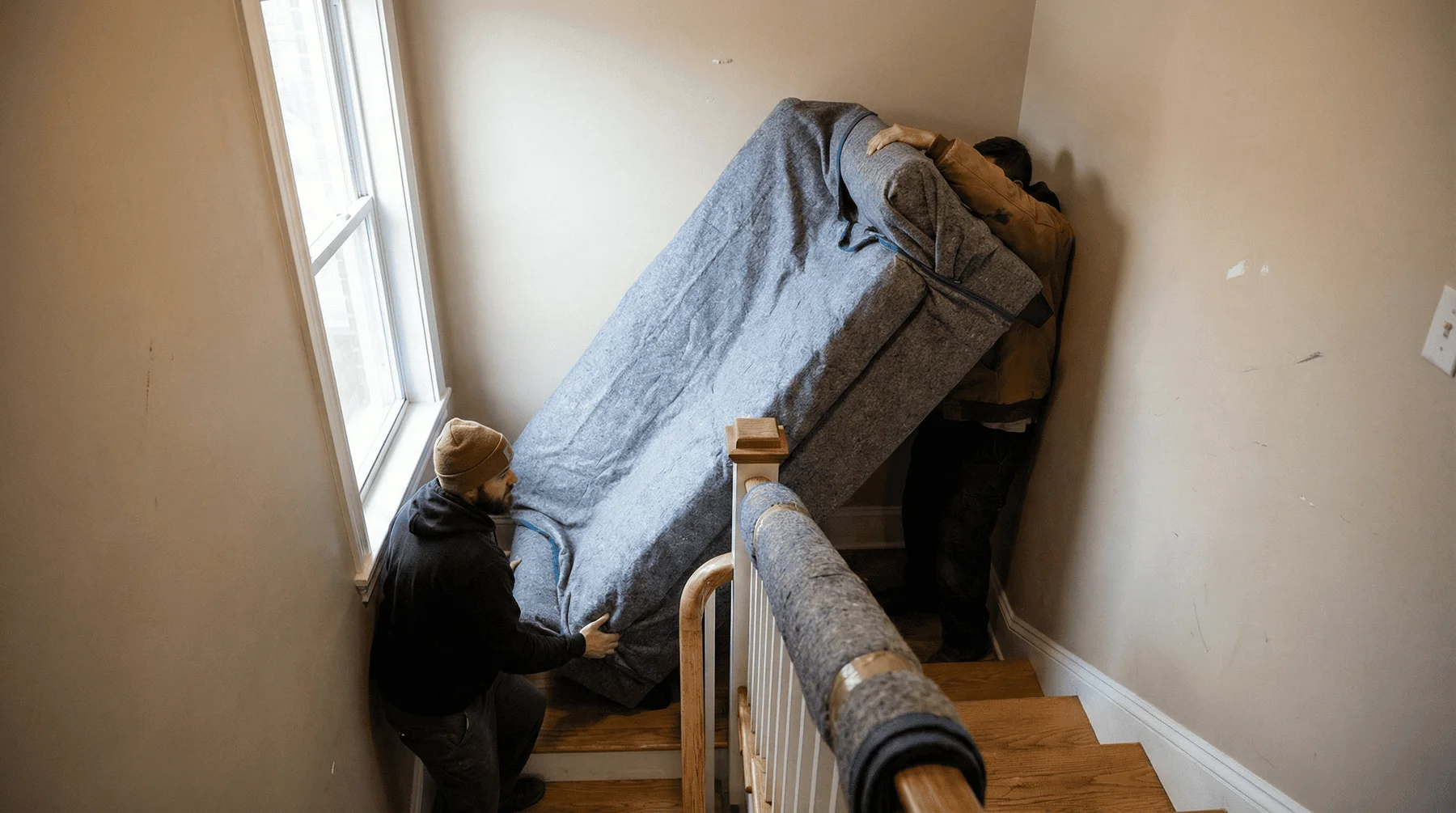
Imagine carrying a heavy sofa or a tall bookshelf. Your line of sight is blocked, and you can’t see the floor directly in front of you. This is what movers deal with all day. Obstacles in hallways, on stairs, or in any walkway are more than just an inconvenience; they are a major safety hazard that slows down the process and increases the risk of damage to your belongings and your home.
How to Prepare:
- Make sure all hallways, stairways, and high-traffic areas are completely clear.
- Remove small area rugs and runners that can slip, or tape them down securely.
- Wipe up any spills to ensure floors are clean and dry.
3. Reserve Parking for the Moving Truck
The distance between your front door and the moving truck is one of the biggest factors affecting how long a move takes. A few extra steps may not seem like much, but when repeated hundreds of times during loading and unloading, they can add hours to the process. This is especially important in dense areas like downtown Seattle, Bremerton, or along the narrow roads of Bainbridge Island.
How to Prepare:
- Reserve the closest possible parking spot for a large truck. Use your own vehicles if necessary until the movers arrive.
- If you live in an apartment or condo, coordinate with building management to reserve a spot in the loading dock or a designated area.
- Secure any necessary city permits for parking in advance.
Insight from Our Team:
“The best way to ensure clear access is to walk through your home beforehand, measure doorways and hallways, and remove any doors or obstacles that might block the path for larger furniture pieces.”
Chris Ortiz – Moving Logistics Coordinator
4. Disassemble What You Can Ahead of Time
While full-service moves include furniture disassembly, taking care of a few key items yourself can save a significant amount of time. When movers have to stop loading to find tools and take apart furniture, it disrupts the flow of the move.
What Helps Most:
- Bed frames (especially complex platform or storage beds)
- TVs removed from wall mounts
- Large shelving units
- Table legs that are easily unbolted
If you’re unsure how to disassemble something, leave it to the professionals. But for simple items, tackling them the night before is a huge help.
5. Create a “Do Not Load” Zone
Every move has a moment of confusion: “Wait, don’t take that box! My car keys are in there!” To prevent this last-minute panic, it’s essential to create a dedicated space for items you plan to transport yourself. This prevents critical items from being accidentally loaded onto the truck.
Create a “Do Not Load” Zone in a Bathroom, Closet, or Your Car For:
- Car keys and house keys
- Wallets, purses, and phones
- Important documents (passports, closing papers)
- Medications and chargers
- A small toolkit and cleaning supplies
- An overnight bag with essentials for the first night
6. Empty and Prepare All Appliances
Appliances require special preparation before they can be moved safely. A refrigerator full of food or a washing machine that hasn’t been properly drained can create messes and increase the risk of damage during transport.
Required Preparation:
- Refrigerator/Freezer: Empty all contents and unplug the unit at least 24 hours in advance to allow it to defrost completely.
- Washing Machine: Disconnect the water lines and run a final spin cycle to drain as much water as possible.
- Dryer: Disconnect the power and gas lines (if applicable) and ensure the drum is empty.
7. Label Rooms Clearly at Your New Home
When movers arrive at your new home, you want boxes and furniture placed in the correct rooms on the first try. They don’t know your floor plan, and answering “Where does this go?” for every item wastes time. The most effective method is to put signs on the doors of each room.
Best Practice:
Use a piece of paper and tape to clearly label each room (e.g., “Master Bedroom,” “Office,” “John’s Room”). This allows your moving crew to match the labels on the boxes to the rooms without needing to ask, ensuring a much faster and more organized unloading process.
8. Secure Pets and Children for Safety
Moving day involves open doors, heavy furniture in motion, and movers with limited visibility. This creates a dangerous environment for curious children and pets who can easily get underfoot. For their safety and your crew’s efficiency, it’s crucial to have a plan.
How to Prepare:
- Arrange for children and pets to stay with a family member, friend, or at a daycare facility for the day.
- If they must be home, keep them secured in a closed room (with a sign on the door) that has already been cleared out.
9. Set Aside All Hardware and Small Parts
One of the most common frustrations after a move is lost hardware. The tiny screws for a bed frame or the brackets for a bookshelf can easily disappear in the shuffle. The best way to prevent this is to keep all parts organized and with the item they belong to.
Best Practice:
- Place all screws, bolts, and small parts in a labeled zip-top bag.
- Securely tape the bag to the largest piece of the corresponding furniture item.
- Alternatively, create a single, clearly labeled “Parts Box” for all hardware.
10. Be Present and Ready at the Start Time
A successful move begins with a clear plan. When your moving crew arrives, the first thing they’ll do is a walkthrough with you to confirm which items are going and to identify any special instructions. Being present, prepared, and ready to make quick decisions allows them to get started immediately.
What Helps Most:
- You are on-site when the truck arrives.
- The initial walkthrough is quick and decisive.
- You have already decided which items are staying and which are going, eliminating any confusion before the lifting begins.
The Payoff: What This Checklist Saves You
Following this checklist isn’t just about making the movers’ job easier; it’s about making your move better. It minimizes the risk of damage to your belongings and property. Most importantly, it removes the common obstacles that cause stress, allowing you to focus on the excitement of your new home.
FAQs To Be Prepared for Moving Day
What happens if movers arrive and I’m still deciding what to take?
Movers typically begin with a walkthrough to confirm inventory. If items are still undecided, the crew must pause repeatedly to ask for direction, which slows loading and increases labor time.
Why do movers ask for a walkthrough before starting?
The walkthrough helps them plan the loading order, protect fragile pieces first, and identify large or difficult items. Without this step, trucks get packed inefficiently, which can increase unloading time and risk damage because items may need to be moved multiple times.
Why do movers prefer labeled rooms instead of labeled boxes alone?
Room labels let the crew unload continuously without stopping to ask where items belong. Even well-labeled boxes slow the process if movers must confirm placement repeatedly, which increases labor time and confusion during unloading.
What should be completely ready before the movers arrive?
All packing should be finished, boxes sealed, and small loose items consolidated the night before. Movers are there to transport belongings, not finish packing. When homes are still mid-pack, crews must wait or assist, which slows the process and can significantly increase the total moving time.
Why do movers recommend clearing walkways and entry points before loading?
Clear hallways, staircases, and doorways allow movers to move large items safely and efficiently. Obstacles like stacked boxes, rugs, or clutter force crews to take longer routes or reposition items repeatedly, which increases labor time and raises the risk of damage or injury.
Need Help Preparing for Your Move?
If you want guidance on planning your moving day or aren’t sure what to prepare, professional movers are here to help. They can walk you through exactly what to do beforehand so your move in Kitsap County, Seattle, or beyond stays efficient, safe, and predictable. Contact a trusted local moving company today for a free consultation.


Get a Quick Quote
Ready to schedule your move? Fill out this form to get a quick moving quote:
Moving Resources
Why Local Moves Fail (and How to Avoid the Same Mistakes)
Local Moving Checklist: 10 Things to Do Before Moving Day
How to Move Furniture Through Tight Spaces, Stairs, and Corners Without Damage
How to Spot Red Flags in a Full-Service Moving Quote
The Pro’s Playbook: A Damage-Free Guide to Moving Your Heavy Furniture
The Professional Approach to Piano Moving
The Most Overlooked Services Full-Service Movers Can Handle
Real Costs of a Full-Service Move: Where Your Money Actually Goes
How to Prepare for a Full-Service Move: The Ultimate Guide to a Flawless Relocation
Pro Moving Services
Serving Western Washington Local Moves
- Kitsap County
- Allyn
- Bainbridge Island
- Belfair
- Bremerton
- Brownsville
- Edmonds
- Gig Harbor
- Gorst
- Grapeview
- Hansville
- Holly
- Indianola
- Keyport
- Kingston
- Port Angeles
- Port Gamble
- Port Ludlow
- Port Orchard
- Port Townsend
- Poulsbo
- Seabeck
- Shelton
- Silverdale
- Southworth
- Sequim
- Suquamish
- Tacoma
- Tracyton
- Union
- Seattle