


The Professional Approach to Piano Moving
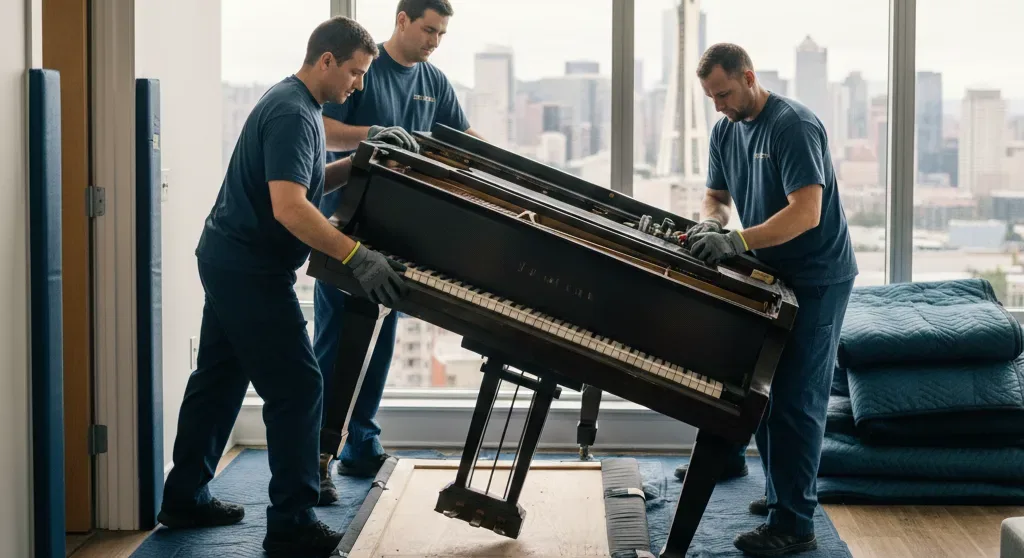
A grand piano is more than a beautiful piece of furniture; it is a complex musical instrument and often a cherished family heirloom. Moving this delicate furniture is not a simple task of heavy lifting. It is a delicate operation that requires precision, expertise, and specialized knowledge. Have you ever wondered what it takes to relocate such a magnificent instrument safely? This guide will walk you through our professional process, from careful dismantling to acoustic positioning, highlighting why precision and the right tools are not just helpful; they are essential.
Insight from Our Team:
“Positioning the piano is key to great acoustics. Piano moving specialists focus on helping each instrument achieve its best possible sound by offering expert placement recommendations that make playing more enjoyable.”
Chris Ortiz – Moving Logistics Coordinator
The Intricate Process of Dismantling
Before a grand piano can be moved, it must be methodically prepared. This preparation is a crucial first step that protects the instrument from its own weight and complexity during transit. The piano moving process begins with a careful assessment, as every piano has its own history. An older piano, for instance, may have been moved multiple times, which can weaken its structural integrity over the years. Our specialists treat these treasured antiques with the heightened care they require.
The dismantling process involves several key steps to ensure nothing is left attached that could cause damage.
- Removing External Components: We carefully detach the piano’s lid, pedals, and legs. This prevents stress on these vulnerable parts and makes the instrument’s main body safer to handle.
- Tilting with Precision: One of the most delicate moments is tilting the piano onto its side to be placed on a specialized skid board. One wrong move here can easily snap a leg, causing irreparable damage. This maneuver requires a coordinated team with the experience and strength to execute it.
Securing the Heart of the Instrument
What many people don’t see is the intricate work happening inside the piano. The internal mechanisms are incredibly sensitive. During a move, components like the hammers, dampers, and even the keys can shift when the piano is rotated for transport. To prevent this, our technicians meticulously secure these internal parts. This step is vital to ensure that when your piano arrives at its new home, it is not only physically intact but also mechanically sound and ready to be played.
Protecting Your Piano and Your Property
Once the piano is securely on a skid board, it is wrapped in thick, padded moving blankets. This provides a cushioned barrier against bumps, scratches, and scrapes. Protecting the piano’s polished finish is a top priority, but our care extends to your home as well. We lay down protective floor runners and use door jamb protectors to safeguard your floors, walls, and doorways from any potential damage during the move.
Transporting an item of this weight and value requires more than just muscle. It demands specialized equipment, including heavy-duty dollies and straps, to ensure the piano remains stable and secure in our truck. Our team works in perfect sync, communicating at every step to navigate tight corners, stairs, and the unique challenges of properties throughout Kitsap County and the greater Seattle area, from hillside homes in Gig Harbor to high-rise apartments in the city.
Reassembly and Perfect Positioning
Arriving at the new location is just the beginning of the final, crucial phase. The reassembly process is done with the same precision as the dismantling. The legs, pedals, and lid are carefully reattached, restoring your piano to its majestic state. But our job isn’t finished once the last screw is tightened.
The placement of a grand piano in a room can dramatically affect its sound quality. Our piano moving specialists want you to get the best sound and enjoyment from your instrument. We are here to provide professional recommendations on where to place your piano to make playing it a more pleasant and sonorous experience. To complete the setup, we provide caster cups. These small but important accessories serve two purposes: they protect your floors from the weight of the piano and can even help improve its acoustic properties by creating a stable base.
Piano Moving FAQ’s
Why can’t a grand piano be moved like normal furniture?
A grand piano is a precision instrument with delicate internal components and uneven weight distribution. Its legs and frame are not designed to handle sideways pressure during transport, so improper handling can break structural parts, damage the action inside, and permanently affect sound quality.
What is the professional process for moving a grand piano?
Movers begin with an assessment, then remove the lid, pedals, and legs. The piano is carefully tilted onto a skid board, secured to prevent internal movement, wrapped in thick padding, and transported using specialized dollies and straps. After delivery, it is reassembled and positioned for stability and proper acoustics.
Can a piano be damaged internally even if it looks fine after a move?
Yes. Internal parts like hammers, dampers, and keys can shift due to rotation and vibration during transport. Without proper stabilization, the piano may look intact but play poorly, go out of tune quickly, or suffer long-term mechanical issues.
Is it safe to move a grand piano without professional movers?
No. Grand pianos often weigh over 600 pounds and require coordinated lifting, structural support, and specialized equipment. Attempting to move one without training risks serious injury, property damage, and irreversible harm to the instrument.
Does a grand piano need tuning after moving?
Yes. Movement and environmental changes affect string tension. Most pianos should be tuned after they acclimate to the new space, usually a few weeks after the move, once temperature and humidity stabilize.
Conclusion
Moving a grand piano involves a symphony of coordinated steps, from the careful dismantling and securing of its delicate parts to the protected transport and thoughtful reassembly. It is a task where professional tools, extensive training, and a deep understanding of the instrument’s mechanics are indispensable. Attempting this move without the right expertise risks not only damage to your home but also irreversible harm to a valuable and beloved instrument.
Trust the Specialists with Your Prized Instrument
If you are facing the challenge of moving a piano in Kitsap County, Bainbridge Island, or the Seattle area, don’t leave it to chance. Our team has the specialized knowledge and equipment to ensure your piano’s move is a success. Contact us today for a consultation and let our experts handle your instrument with the care and precision it deserves.



Get a Quick Quote
Ready to schedule your move? Fill out this form to get a quick moving quote:
Moving Resources
Why Local Moves Fail (and How to Avoid the Same Mistakes)
Local Moving Checklist: 10 Things to Do Before Moving Day
How to Move Furniture Through Tight Spaces, Stairs, and Corners Without Damage
How to Spot Red Flags in a Full-Service Moving Quote
The Pro’s Playbook: A Damage-Free Guide to Moving Your Heavy Furniture
The Professional Approach to Piano Moving
The Most Overlooked Services Full-Service Movers Can Handle
Real Costs of a Full-Service Move: Where Your Money Actually Goes
How to Prepare for a Full-Service Move: The Ultimate Guide to a Flawless Relocation
Pro Moving Services
Serving Western Washington Local Moves
- Kitsap County
- Allyn
- Bainbridge Island
- Belfair
- Bremerton
- Brownsville
- Edmonds
- Gig Harbor
- Gorst
- Grapeview
- Hansville
- Holly
- Indianola
- Keyport
- Kingston
- Port Angeles
- Port Gamble
- Port Ludlow
- Port Orchard
- Port Townsend
- Poulsbo
- Seabeck
- Shelton
- Silverdale
- Southworth
- Sequim
- Suquamish
- Tacoma
- Tracyton
- Union
- Seattle